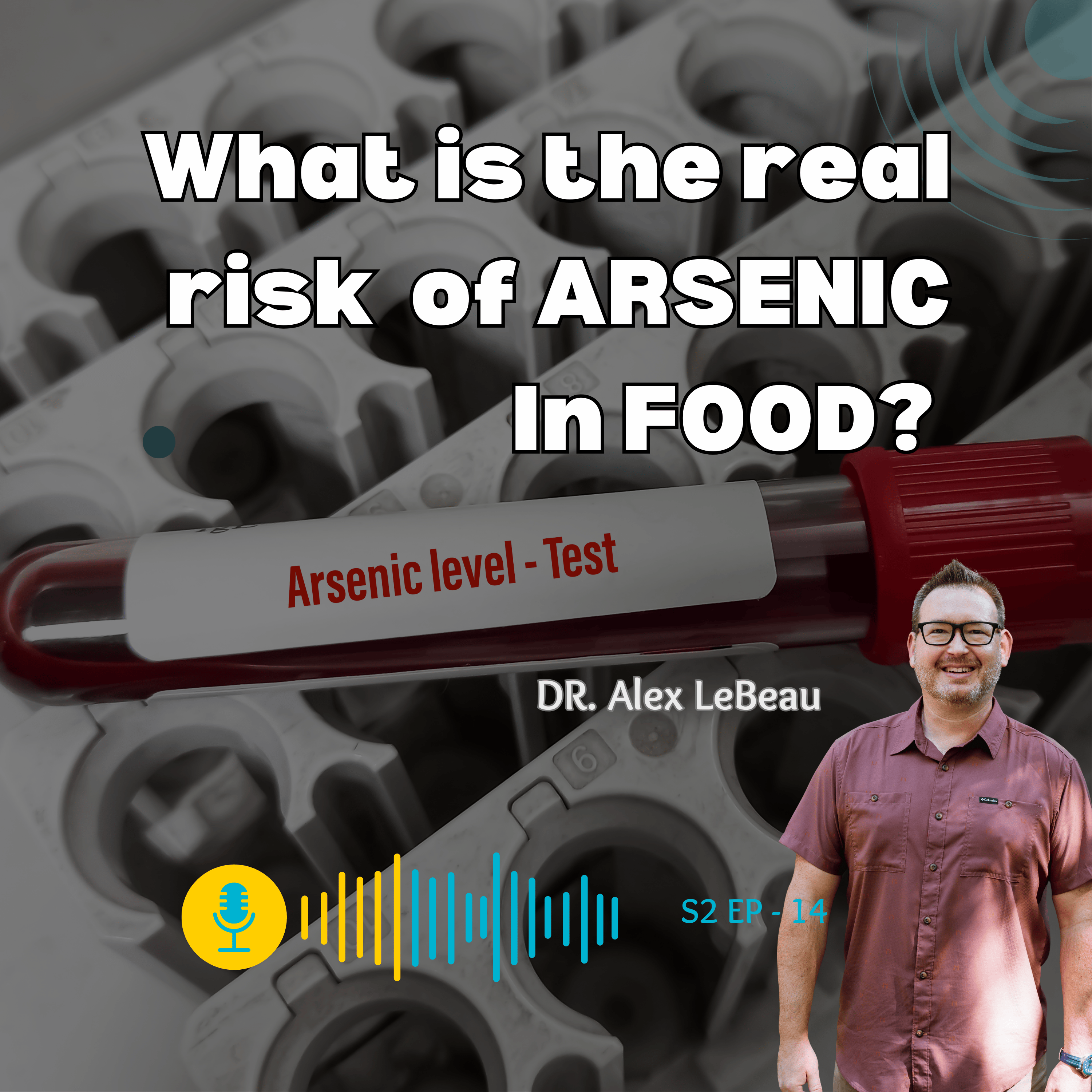
Orlando, FL, Feb. 02, 2026 (GLOBE NEWSWIRE) -- Exposure Consulting, a leader in exposure risk assessment, announced the release of a new episode of the Exposure Scientist Podcast that critically examines Florida’s recent warnings about arsenic levels in candy. In the episode, host Dr. Alex LeBeau questions the lack of transparency behind the state’s consumption guidelines and emphasizes the importance of evidence-based risk communication in public health.
Is Arsenic a Hazard or a Risk
The episode responds to widely circulated figures suggesting that certain candies contain elevated levels of arsenic and includes state-issued guidance on “safe” annual consumption limits for children and adults. While the numbers have sparked alarm, Dr. LeBeau argues that the absence of methodological transparency makes the data difficult—if not impossible—to interpret responsibly.
“A single number without context doesn’t tell us whether something is dangerous,” LeBeau explains. “Risk is about probability, exposure, dose, and bioavailability—not just detection.”
In the episode, LeBeau outlines some of the core elements required for a credible human health risk assessment, including laboratory methods, sample sizes, detection limits, arsenic speciation, exposure assumptions, safety factors, and reference benchmarks. He notes that none of these details were made available alongside the Florida data, leaving significant gaps that undermine scientific interpretation.
The discussion also highlights a key issue often lost in public reporting: arsenic is a naturally occurring element, present at trace levels in food, water, and soil worldwide. According to LeBeau, detecting arsenic alone does not automatically indicate negative health outcomes without understanding its chemical form, intake amounts, and how much is actually absorbed by the body.
“When agencies publish conclusions without showing how they arrived there, it creates confusion instead of clarity,” LeBeau says. “That helps no one, and especially parents trying to make informed decisions.”
Rather than dismissing concerns outright, the episode calls for greater openness and scientific rigor, inviting officials and researchers involved in the Florida analysis to share their methods and assumptions publicly. LeBeau also emphasizes the importance of independent scientific evaluation and verification via peer review.
The episode is intended to help listeners critically evaluate alarming headlines and understand how risk is properly assessed in toxicology and exposure science.
“Science works best when the data are open and the process is transparent,” LeBeau concludes. “If the information is sound, it should stand up to independent scrutiny.”
About the Exposure Scientist Podcast
The Exposure Scientist Podcast explores real-world chemical and biological exposures through the lens of toxicology, risk assessment, and regulatory science. Hosted by Dr. Alex LeBeau, the show aims to bridge the gap between complex scientific data and public understanding, offering clarity on issues that affect everyday health decisions.
About Exposure Consulting
A leading exposure consulting organization specializing in water safety, exposure risk assessment of biological, chemical and airborne contaminants.
Press Inquiries
John Brocas
pr [at] exposureconsulting.com
https://exposureconsulting.com
A video accompanying this announcement is available here: https://youtube.com/watch?v=7obhiYCECQ4