MIAMI, FL, Jan. 30, 2026 (GLOBE NEWSWIRE) -- Disclaimer: This article is for informational purposes only. It is not medical advice. Skin, joint, and bone health concerns should be evaluated by a qualified healthcare professional. This content does not diagnose, treat, cure, or prevent any disease. If you purchase through links in this article, a commission may be earned at no additional cost to you.
This release is an informational overview of publicly available disclosures for NativePath Collagen Peptides and broader consumer research behavior within the collagen supplement options category. Nothing in this content should be interpreted as medical advice, a product endorsement, or a performance claim.
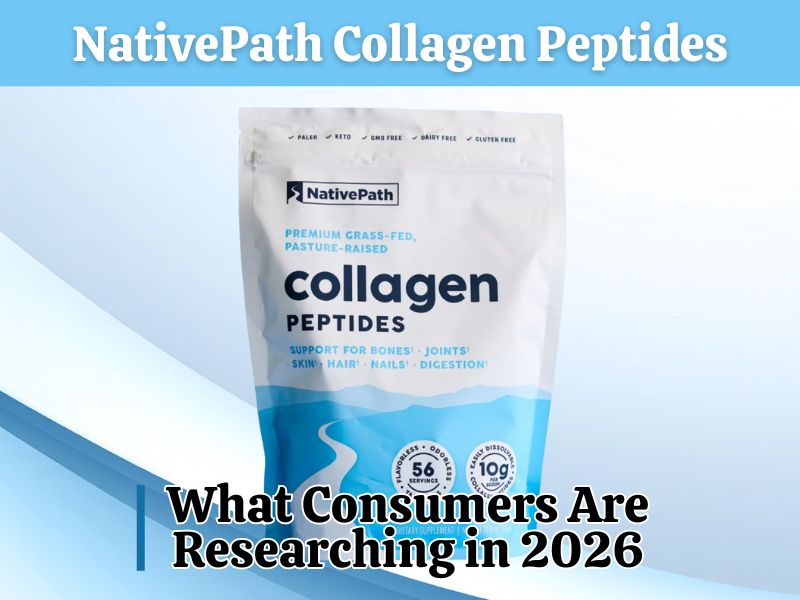
As consumer interest in collagen peptides powder continues to grow heading into 2026, updated product disclosures for NativePath Collagen Peptides have recently become publicly available. With more people researching what's out there, detailed product information is now accessible for anyone trying to better understand their supplement options.
This article provides informational context about the collagen supplement category and summarizes what NativePath has disclosed about its product. Readers seeking primary-source detail can view the current NativePath Collagen Peptides offer (official NativePath page) to review the company's complete product disclosures directly. This article does not assess product effectiveness or outcomes and focuses solely on publicly available disclosures.
Why Consumers Are Researching Collagen Supplement Options
If you've been researching collagen supplement options lately, you're not alone. Search interest in this category appears to be rising as more adults look into what products are available and what factors might be worth considering.
People explore this category for a variety of reasons—curiosity about collagen as a protein, interest in understanding what's in these products, or simply wanting to know what options exist before having a conversation with their healthcare provider. Whatever the reason, the sheer number of collagen peptides powder products on the market can make the research process feel overwhelming.
That's where understanding how to read labels and compare disclosures becomes valuable. Many people choose to consult qualified healthcare professionals for personalized guidance, especially when evaluating whether any supplement fits their individual circumstances.
How Consumers Compare Collagen Supplement Options
When evaluating collagen supplement options, consumers often focus on factors that have nothing to do with performance claims—and everything to do with transparency and label literacy.
Publicly available labels may list information about sourcing (such as bovine, marine, or chicken-derived collagen), processing methods, and whether the product contains a single ingredient or a blend. Some brands disclose third-party testing, while others do not. Some provide manufacturing location details, while others keep that information minimal.
Consumers evaluating collagen peptides powder products often compare serving size disclosures, additive profiles, allergen statements, and whether the product contains artificial flavors, sweeteners, or fillers. These are informational data points—not indicators of what any product does or doesn't do.
The goal for most people researching this space isn't to find "the best" product (a subjective and often marketing-driven term), but rather to find a product whose disclosures align with what they're looking for—and then discuss that option with a qualified healthcare professional if appropriate.
What "Hydrolyzed Collagen Peptides" Means on a Label
If you've seen the term "hydrolyzed" on a collagen peptides powder label and wondered what it actually means, you're asking the right question.
"Hydrolyzed" collagen peptides typically refers to collagen that has been processed into smaller peptides. Consumers often see this term on collagen supplement labels and may interpret it as describing how the ingredient is processed rather than guaranteeing any particular result.
The hydrolysis process is a manufacturing step—it describes what happens to the collagen ingredient before it's packaged, not what happens after someone consumes it. Understanding this distinction can help you read labels more critically and avoid conflating processing terminology with outcome promises.
When brands reference "hydrolyzed collagen peptides," they're describing an ingredient characteristic. What that means for any individual is a question best discussed with a qualified healthcare professional.
Collagen Types on Labels: What Types I and III Actually Mean
Collagen supplements commonly reference "types" (such as Types I and III) as a way to describe the source profile of the collagen ingredient. If you've seen these terms and wondered whether they matter, here's what you should know.
Collagen type labeling refers to the structure of the collagen protein itself—different types are found in different tissues in the body. Consumers may see type references on product pages and labels, but type labeling alone does not indicate clinical evaluation of the finished supplement.
Some products list multiple types, while others focus on one or two. The presence of type information on a label tells you something about the ingredient profile but doesn't tell you what the product will or won't do. That's a distinction worth keeping in mind when comparing collagen supplement options.
How to Read a Collagen Supplement Label
Reading a supplement label critically is one of the most practical skills you can develop when researching this category. Here's what to look for:
Serving size disclosure — How much collagen does each serving contain? Is the serving size realistic for daily use?
Single-ingredient vs. blends — Does the product contain only collagen, or is it combined with other ingredients? Blends aren't inherently better or worse—they're simply different, and the choice depends on what you're looking for.
Additives and fillers — Some products contain flavoring, sweeteners, or flow agents. Others don't. The label will tell you.
Allergen statements — Collagen sourcing matters for allergen considerations. Bovine, marine, and poultry-derived collagen each have different allergen profiles.
Manufacturing disclosures — Some companies share where and how their products are made. This information, when available, can help you evaluate transparency.
None of these factors tell you whether a product "works"—that's not the point. The point is to understand what you're looking at so you can make an informed decision and have a productive conversation with a healthcare provider if needed.
Regulatory Differences Between Supplements and Prescription Options
Dietary supplements—including collagen products—are regulated differently than prescription drugs under federal guidelines. In the United States, supplements do not undergo pre-market approval the way pharmaceutical drugs do, and companies are responsible for product labeling and compliance with applicable rules.
This regulatory distinction provides context for consumers comparing supplement options to prescription alternatives. The FDA maintains oversight authority for enforcement actions, but the pre-market pathway is fundamentally different.
If you're evaluating collagen supplement options, you may choose to review labels carefully and consult a qualified healthcare professional—especially if you're pregnant, nursing, managing a health condition, or taking medications.
Who Should Be Cautious Before Using Collagen Supplements
While this article doesn't provide medical advice, it's worth noting that certain groups are often encouraged to exercise additional caution before adding any supplement to their routine.
Individuals taking prescription medications, those with known allergies (particularly to collagen source materials like bovine or fish), pregnant or nursing women, and people managing kidney concerns are often advised to consult qualified healthcare professionals before using dietary supplements.
This guidance isn't specific to collagen—it applies across the supplement category. The point isn't to discourage research; it's to encourage informed conversations with healthcare providers who understand your individual circumstances.
Ingredient Transparency in the Collagen Supplement Category
Ingredient transparency is a factor consumers frequently consider when researching collagen supplements. Companies vary significantly in how much detail they provide about sourcing, processing, and formulation.
According to publicly available company disclosures, NativePath Collagen Peptides lists grass-fed bovine collagen peptides (Types I and III) as its primary ingredient. Readers interested in specific dosage information can find complete details on the company's official product page. This overview is informational only and does not evaluate product outcomes or make performance claims.
Interpreting Scientific References on Supplement Websites
Some supplement brand websites include academic citations or reference lists related to ingredients or category research. These citations often describe general scientific exploration and may not represent direct clinical testing of the finished dietary supplement product itself.
If you're researching collagen supplements, you may encounter such references and wonder what they actually mean. In general, scientific citations on a product website reflect the brand's attempt to provide educational context—not necessarily proof that the specific finished product has been independently studied or validated.
Citations on a brand site may refer to ingredient research and may not reflect testing of the finished product. Understanding this distinction helps you evaluate marketing materials more critically.
What Company Disclosures Typically Include
When comparing publicly available information across brands in this space, consumers often look at several factors that have nothing to do with performance claims:
Ingredient transparency — Does the company clearly list what's in the product?
Manufacturing disclosures — Does the company share where and how the product is made?
Return and refund policies — What does the company disclose if a customer is unsatisfied?
Customer service accessibility — Does the company provide clear contact information?
Product format — Does the company explain what the consumer will receive?
These are informational considerations, not performance evaluations. Each consumer must determine what factors matter most to their own decision-making process.
What NativePath Discloses About Its Product
According to publicly available company disclosures, NativePath Collagen Peptides is positioned as a powdered collagen peptide supplement designed for individuals researching collagen supplement options. The company states that its product uses grass-fed bovine collagen peptides and is described as flavorless and designed for mixing into beverages.
NativePath also states that the product is manufactured in a facility registered with the FDA for manufacturing operations, which does not indicate FDA evaluation or approval of the finished dietary supplement.
The company states the product is gluten-free, dairy-free, sugar-free, and GMO-free, with no artificial flavors or preservatives. NativePath describes the formula as flavorless and odorless in a powder format. Readers interested in reviewing these disclosures firsthand can view the current NativePath Collagen Peptides offer (official NativePath page) for complete details.
Refund Policies and Customer Support Disclosures
According to company disclosures, NativePath outlines a 365-day refund policy on its official website, with terms and eligibility conditions described by the company. The company also provides customer service through email and phone support.
Questions Consumers Often Ask Before Choosing Collagen Peptides Powder
What should I look for on a collagen supplement label?
Consumers often review serving size, ingredient sourcing, additive profiles, allergen statements, and manufacturing disclosures. These are informational data points that help you understand what's in the product.
Does collagen type matter?
Collagen type labeling (such as Types I and III) describes the source profile of the ingredient. Type information alone does not indicate clinical evaluation of the finished product.
Should I talk to a healthcare provider before using collagen supplements?
Many consumers—especially those taking medications, managing health conditions, or with known allergies—choose to consult qualified healthcare professionals for personalized guidance.
What does "hydrolyzed" mean on a collagen label?
"Hydrolyzed" describes a processing method where collagen is broken into smaller peptides. It's a manufacturing characteristic, not a guarantee of any particular outcome.
Reference Links for General Background
The following external links are provided only as general background reading and are not endorsements, reviews, rankings, or evidence of product performance. This article is based on publicly available company disclosures and general category context.
Background link: collagen supplement category context
Background link: collagen supplement category context
Where to Find Official Information
If you want to review NativePath's complete product disclosures, you can access the company's official website, where full product information and availability details are published.
Readers seeking primary-source detail can view the current NativePath Collagen Peptides offer (official NativePath page) to review the company's complete product disclosures directly.
Contact Information
NativePath
1395 Brickell Ave. Suite 800
Miami, FL 33131 United States
Email: cs@nativepath.com
Phone: 1-800-819-2993
About NativePath
NativePath is a wellness company that offers dietary supplements within the collagen supplement options category. According to the company, its products are manufactured in an FDA-registered facility in the United States using formulations the company describes as including grass-fed, pasture-raised bovine collagen. The company outlines a 365-day refund policy, and additional details about the company and its product line are available on its official website.
Disclaimer: This content is for informational purposes only and does not constitute medical advice. Skin, joint, and bone health concerns should always be evaluated by a qualified healthcare professional. This article does not diagnose, treat, cure, or prevent any disease.
Affiliate Disclosure: This content may contain affiliate links. If you purchase through links in this article, a commission may be earned at no additional cost to you. This does not influence the informational content provided.
Product and Pricing Disclaimer: Product availability, pricing, and promotional offers are determined solely by the manufacturer and may change without notice. Verify all details on the official product page before making any purchase decisions.
Publisher Responsibility Disclaimer: The publisher of this content is not the manufacturer of the product discussed and makes no independent claims about product performance. All product-specific information is attributed to publicly available company disclosures.

Email: cs@nativepath.com Phone: 1-800-819-2993